![[Photos/Images] What Do the Mongol and Islamic Cultures of the TV Anime Jaadugar: A Witch in Mongolia Reveal? A Roundtable With the Voice Cast 1st](https://times-abema.ismcdn.jp/mwimgs/f/9/724w/img_f9ea35c7e8ab27625189d25148158644499339.jpg)

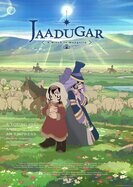
The TV anime adaptation of A Witch’s Life in Mongol, the manga by Tomato Soup serialized in AKITASHOTEN's Souffle, has been airing since July 2026. Sitara, a girl taken in by a family of scholars, loses her family to the invasion of the Mongol Empire and is made to serve the empire as a captive. After meeting Töregene, the sixth consort of the third prince Ögedei, Sitara uses the wisdom she has cultivated as her weapon and works in the shadows to bring the empire down from within.
Weaving humor into its weighty story, the series takes as its subject a historical setting that feels unfamiliar to those of us living in modern Japan, including medieval Mongol culture and Islamic culture. Precisely because it holds such complex elements, with various foreign cultures and the characters' own intentions intersecting, each individual thing depicted in the work stays with you, and looking at it in comparison with your own life today should be interesting as well.
This article brings you a roundtable with the main cast of the TV anime Jaadugar: A Witch in Mongolia — Akira Sekine as Sitara, Ami Koshimizu as Töregene, Jun Saito as Muhammad, Hiro Shimono as Ögedei, and Ryota Suzuki as Tolui — in which they talk about how they took in elements such as Mongol culture as they joined the production, along with what makes the work appealing.
— The TV anime Jaadugar: A Witch in Mongolia leaves a strong impression with the diverse values of its characters, grounded in Mongol culture and Islamic culture. There are many elements that are not very familiar, so how did you take them in as you went into recording?
Sekine: Before recording, sound director Noriyoshi Konuma explained the historical background and the culture to us one point at a time. For example, he told us that while the word slave sounds frightening, at the time it also had the aspect of someone you hire with money, so we should not think of it as too frightening.
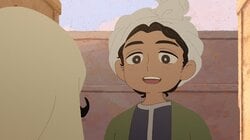
— Indeed, in episode 1, the scene where Sitara is bought as a slave by Fatima is depicted so naturally, as if someone were buying a piece of furniture, that it came as a culture shock.
Shimono: It is something like what Japan would call a servant in a household's service, isn't it?
Koshimizu: In reality it must have varied depending on the circumstances, but in this scene, as one example, it feels more like a housekeeper, or an old family manservant or nursemaid.
Sekine: The way it is handled in this work is not something terrible.
Koshimizu: It also left an impression that slaves did not have to bear responsibility, and that may be a little different from the Japanese sense of a servant in service, don't you think?
Shimono: That has its good and bad sides too. Actually, before working on Jaadugar: A Witch in Mongolia, I had done narration for a program about learning world history. It covered Mongolia as well, and amid all those cultures that began somewhere around Europe, flowed onward little by little, came into full flower and then declined, the Mongol Empire really did take in all sorts of countries and grow into a huge nation.
Up until then, it had been the conquered side that had to learn the religion and culture of the side that ruled them, but by taking those in the other way around — with the ruling side doing the learning — it seems the Mongol Empire became a mighty empire that no country of the time could stand against.
In episode 1 as well, they carried off the books, but it was not a mindset of getting rid of them; rather, they took in whatever they could gain from them for the sake of their prosperity.
Koshimizu: Keeping the good parts as you go looks ideal at first glance, doesn't it?
Shimono: Exactly. But then, as a matter of historical fact, why did that same Mongol Empire grow smaller? When you look at world history, there are times when ways of thinking change as the generations change.
Because Jaadugar: A Witch in Mongolia touches on Islamic culture and Mongol culture, I was reminded once again that it is an extremely complex work in which the ways many different people think and live — including how they coexist and how they come into conflict — are thoroughly intermingled.
Next Page






![Screenwriter Gen Urobuchi Looks Back on How He Joined Puella Magi Madoka Magica and the Anime Scene at the Time [Puella Magi Madoka Magica the Movie -Walpurgisnacht: Rising- Interview]](https://times-abema.ismcdn.jp/mwimgs/f/b/250w/img_fbb30b612f1af981c22c1964d3d1464a510655.jpg)