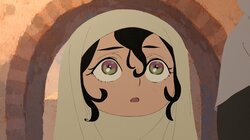
![[Photos/Images] "Music that makes you glad you encountered it" — Yuki Kajiura's thoughts poured into the theme song and soundtrack [Puella Magi Madoka Magica The Movie: Walpurgisnacht: Rising- Interview] 1st](https://times-abema.ismcdn.jp/mwimgs/2/c/724w/img_2caa71937b6e13eeecab80d3a6e1d83c1000985.jpg)

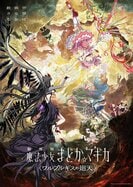
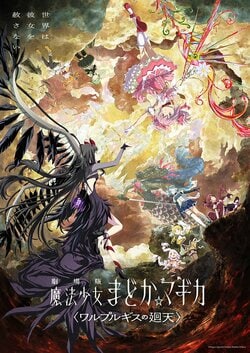
Puella Magi Madoka Magica The Movie: Walpurgisnacht: Rising, the first completely new entry in the series in 13 years, is currently playing in theaters nationwide. Original core staff members, including Chief Director Akiyuki Simbo, Original Character Designer Ume Aoki, and Scriptwriter Gen Urobuchi, have reunited to depict the story that follows Puella Magi Madoka Magica: The Movie -Rebellion-.
The music for Walpurgisnacht: Rising is composed by Yuki Kajiura, just as it has been for the previous installments in the series. She colors the world of Puella Magi Madoka Magica with both the background score and the theme song, "Kanata". In this article, we interviewed Kajiura to hear what she had in mind during the music production and the feelings she poured into the theme song "Kanata."
—Regarding the music production for Walpurgisnacht: Rising, was there an overall request for a specific musical direction you should take?
Yuki Kajiura (hereafter, Kajiura): I had music meetings with the main staff, listening to their thoughts on the work, and consulting them on how to handle the parts I was unsure about. Other than that, it was mostly left up to me.
This work used film scoring (*), so even though it was left up to me, Sound Director (Yota) Tsuruoka actually specified every single scene where music should be placed.
*A method of producing music to match the video footage.
—Madoka Magica is a work with a massive amount of visual information. How did you interpret it?
Kajiura: The very placement of the music—compared to silent scenes without music—explains about half of the emotion, telling me, "This is the feeling here because the music comes in now." I formed my interpretations from there, and consulted them on the parts where I was really lost. The battle scenes, where they fight as if they're dancing, have very little dialogue; knowing they were leaving those scenes up to the art and the music made it incredibly rewarding to compose for. Some of the music tracks themselves are quite long, but the silent scenes are long as well.
—The music having that distinct Madoka Magica feel was very striking.
Kajiura: My impression while making it was that, for the first half, I just wanted to attach music that sounded quintessentially Madoka Magica, as if saying "Welcome back to Madoka Magica" to the viewers.
After all, (when it comes to Madoka Magica) there's this expectation of, "This kind of visual, this kind of world, means this kind of music, right?" What was difficult was that this movie feels like an ensemble cast, so I couldn't compose in a way that focused on and stayed close to just one person. Also, as it moves into the second half, there are more and more scenes where the viewer's impression might drastically change how they receive it.
—That's true. There are also a lot of points that leave room for speculation.
Kajiura: If the music explains too much, it ends up misleading the audience. So for those parts, I focused on attaching music that is beautiful and has a strong sonic presence, but doesn't explicitly explain whether the moment is moving or sad.
In the second half where the mysteries deepen, I was careful not to interpret things too deeply myself. For parts where the interpretation was ambiguous, I decided to compose the music while embracing that ambiguity. I felt that if I didn't, I would end up dragging the viewers in a specific direction.
The visuals are incredibly beautiful, so I easily get the urge to go, "I want to write beautiful, moving music!" but I knew I couldn't do that (lol).
If the audience gets pulled by the music, the complexity of the scene won't get across. There are a few scenes where I portrayed light as nothing more than light, making sure not to arbitrarily create a sense of "coolness" within that light. Those scenes might be the ones that left the strongest impression on me. It was like I had to make sure the music wasn't too much like music.
—It's certainly a fascinating topic, given how large a role music plays in a visual medium.
Kajiura: Because it's perfectly fine for everyone to think differently and have their own interpretations, I really didn't want the music to get in the way of that. I had a strong desire to properly preserve that freedom. Even so, for the scenes I agonized over, I consulted the staff during our meetings.
Next Page