![[Photos/Images] Explaining the Anime Production Process! Studio Eight Bit Studio Tour Report for "That Time I Got Reincarnated as a Slime the Movie: Tears of the Azure Sea" 1st](https://times-abema.ismcdn.jp/mwimgs/e/5/724w/img_e52355525f7e320fd1b69980a86795e11003954.jpg)

Japanese anime productions are enjoyed not only domestically but in countries around the world. The production process is multifaceted, and many people are involved in creating a single anime work.
"That Time I Got Reincarnated as a Slime the Movie: Tears of the Azure Sea," which has been screening since February 27, 2026, has also become a major hit, and following the film's release, the fourth season of the TV anime is scheduled to begin broadcasting in April. In this article, we had the opportunity to visit Studio Eight Bit, which produces the anime series of "TenSura," and based on the various production materials we examined during our coverage, we will explain the general flow of the anime production process.
First, the entire process until an anime work is completed can be broadly divided into three stages. These are called pre-production, production, and post-production respectively, and we will proceed with explanations divided by each stage.
Pre-Production: Where the Framework of an Anime Work is Created
Pre-production is the process of creating the settings and other elements necessary for actually making the anime. Setting materials such as scripts, storyboards, and character designs created during pre-production are often compiled as publications, so even anime fans have many opportunities to encounter them.
First, after the project of what kind of anime work to create is decided by the production company and others, the script that forms the backbone of the story is created. For TV anime, approximately 12 to 13 episodes are produced per season, so the process of allocating which episodes will depict which storylines is called series composition.
Both the script and series composition are handled by scriptwriters as their names suggest, but it is rare for one person to complete them alone, and in most cases, the director, producers, the original author, and other main staff members of the work gather for script meetings to decide through discussion.
In parallel with script production, production materials necessary for anime production such as character designs and art settings are also created.
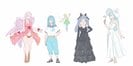
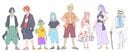
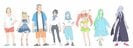
Taking "That Time I Got Reincarnated as a Slime the Movie: Tears of the Azure Sea" as an example, while the basic settings for main characters such as Rimuru Tempest and Gobta were created during the TV anime, the setting of this work is the sea. Rimuru Tempest and the group appear in swimsuits enjoying the resort, and summarizing as settings what kind of swimsuit costumes each character wears is also part of the character design and costume design work.
![[Photos/Images] Explaining the Anime Production Process! Studio Eight Bit Studio Tour Report for "That Time I Got Reincarnated as a Slime the Movie: Tears of the Azure Sea" 2nd](https://times-abema.ismcdn.jp/mwimgs/b/1/724w/img_b1f4eb1fd3a76233f726d96182c57dc41674526.jpg)
![[Photos/Images] Explaining the Anime Production Process! Studio Eight Bit Studio Tour Report for "That Time I Got Reincarnated as a Slime the Movie: Tears of the Azure Sea" 3rd](https://times-abema.ismcdn.jp/mwimgs/a/3/724w/img_a3bc980356641b3789d766b5acaaad7b1553642.jpg)
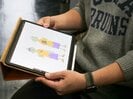
Additionally, depending on the work, a process called image boards is also incorporated, where illustrations are drawn to visualize what kind of scenes will look like based on the script or the earlier-stage plot (a simple summary of what happens in the story). This is for sharing the visual image of what kind of footage will be created with many staff members from a state of only text information.
For "That Time I Got Reincarnated as a Slime the Movie: Tears of the Azure Sea," we had the opportunity to cover the desk of pomodorosa, who is credited for image boards and costume design, and were able to view numerous costume designs and image boards actually used in the main story.
![[Photos/Images] Explaining the Anime Production Process! Studio Eight Bit Studio Tour Report for "That Time I Got Reincarnated as a Slime the Movie: Tears of the Azure Sea" 4th](https://times-abema.ismcdn.jp/mwimgs/4/2/724w/img_42acd7fa63837d84da1f40eadd9c88f0911763.jpg)
Then, something called storyboards is created from the script. This becomes the blueprint for the anime that describes what camera angles will be used to capture the content written in the script and how cuts will be layered to create continuity as footage, and it is composed of pictures showing cut content and written instructions.
Next Page



![Screenwriter Gen Urobuchi Looks Back on How He Joined Puella Magi Madoka Magica and the Anime Scene at the Time [Puella Magi Madoka Magica the Movie -Walpurgisnacht: Rising- Interview]](https://times-abema.ismcdn.jp/mwimgs/f/b/250w/img_fbb30b612f1af981c22c1964d3d1464a510655.jpg)