Production: Where Life is Breathed into the Pictures
The etymology of animation is said to derive from the Latin word "anima," which means soul or life. While flipping through pictures drawn frame by frame to move slightly makes them appear to be moving, the fundamental aspect of anime's visual expression is making still pictures appear to be moving.
Based on storyboards, character designs, and various settings created during pre-production, the process where animators actually draw pictures is the key element of production—animation drawing. The animation drawing process in anime is broadly divided into layout, key animation, and in-between animation.
While this is a very important process, to explain simply: layout is designing how characters and backgrounds are arranged and move based on storyboards; key animation is drawing pictures of key points showing what kind of movements will occur and recording timing and other details on an instruction sheet called a timesheet; and in-between animation is drawing pictures between the movements drawn by key animation to express continuous motion.
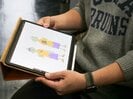
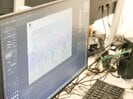
For "That Time I Got Reincarnated as a Slime the Movie: Tears of the Azure Sea," we were also able to cover the desk of animator Shinji Mochida, who was in charge of cuts such as street scenes where many people come and go on the resort island that serves as the setting.
Currently, digitalization of animation drawing has been introduced in many studios, and according to animation producer Kohei Eguchi of this work, Eight Bit has also been advancing digitalization for several years, and this work was also produced as a hybrid of digital and analog methods.
![[Photos/Images] Explaining the Anime Production Process! Studio Eight Bit Studio Tour Report for "That Time I Got Reincarnated as a Slime the Movie: Tears of the Azure Sea" 5th](https://times-abema.ismcdn.jp/mwimgs/5/2/724w/img_52cb25296b6f73ad855a0295dea58de7820435.jpg)
As benefits of digitalization, he mentioned being able to centrally manage storyboards and key animation in progress and immediately check and adjust movements. The processes following animation drawing are also now established as digital.
There is the finishing process of coloring each picture drawn by animators, and compositing, which composites colored materials into a single footage according to the timing of the timesheet. In compositing, background art materials with backgrounds specified in layouts are also composited, and effects and special effects such as light are applied.
As the actual completed footage, what is casually referred to as "animation drawing" is the footage that has gone through this finishing and compositing, so anime fans should not make mistakes about this. Also, 3DCG is incorporated in many anime works, but in those cases as well, designs are created in pre-production and the actual footage is created in production.
Post-Production: The Process Where Sound and Performance are Added to Footage and the Work is Completed
Footage created cut by cut during production is edited (cut) to match one episode of TV anime or theatrical release length to become one piece of footage. Then, voice actors perform voice acting to match that footage. Starting with Miho Okasaki who plays Rimuru Tempest, the participation of Koichi Domoto as a voice actor in "That Time I Got Reincarnated as a Slime the Movie: Tears of the Azure Sea" has been a topic of discussion.
BGM and sound effects (SE) matched to scenes are also created, and combined with the voices recorded during post-recording, they are inserted into the footage in a process called dubbing. Then there is the V-editing process, which performs a final check to ensure there are no problems with the footage, inserts staff credits, and completes it as the final video work.
Since this V-editing is the final process in anime production, materials that are behind schedule are sometimes created with an extra push to meet this V-editing deadline.
The processes explained this time are only a small part of each process, and there are processes that we could not introduce. Many people demonstrate their abilities across many processes and make every possible effort to complete the work. That entire process is what creating an anime work means. By being conscious of this when watching not only "That Time I Got Reincarnated as a Slime the Movie: Tears of the Azure Sea" but any anime work, you should be able to enjoy anime works even more.
Coverage, Photography, Text / kato
(C)川上泰樹・伏瀬・講談社/転スラ製作委員会
List of images for this article



![Screenwriter Gen Urobuchi Looks Back on How He Joined Puella Magi Madoka Magica and the Anime Scene at the Time [Puella Magi Madoka Magica the Movie -Walpurgisnacht: Rising- Interview]](https://times-abema.ismcdn.jp/mwimgs/f/b/250w/img_fbb30b612f1af981c22c1964d3d1464a510655.jpg)