![[Photos/Images] Eva Units and National Treasures Merge! "EVANGELION Wind God and Thunder God Folding Screens" to be Released on July 17th 1st](https://times-abema.ismcdn.jp/mwimgs/3/1/724w/img_31a75cfa43213bd4180d9e8aa43a2a42282554.jpg)

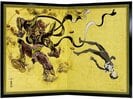
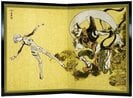
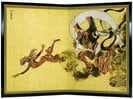
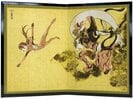
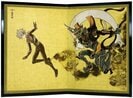
As the second installment of the "Eva Japonism" project, which fuses traditional Japanese culture with the "Evangelion" series, a total of five works for the "EVANGELION Wind God and Thunder God Folding Screens" have been created.
"Evangelion" is an anime series depicting the battles between 14-year-old boys and girls who become pilots of giant multipurpose humanoid decisive weapons, and mysterious enemies known as "Angels." The 1995 TV series "Neon Genesis Evangelion" sparked a social phenomenon, and in 2007, the series restarted as the "Rebuild of Evangelion" (Evangelion: New Theatrical Edition). All four films were released, and the final installment in 2021, "Evangelion: 3.0+1.0 Thrice Upon a Time," recorded massive box office revenues exceeding 10 billion yen. It continues to be loved around the world today.
The "Eva Japonism" Expression Project: Where Japanese Culture and Evangelion Intersect
"Eva Japonism" is a project that collaborates traditional Japanese arts, crafts, and techniques with the globally beloved "Evangelion" to present a new form of Japanese culture in the modern era.
By reinterpreting "Evangelion" through expression techniques nurtured in Japan—such as ukiyo-e, washi (traditional Japanese paper), woodblock printing, and folding screens—the project has visualized the "mythology," "symbolism," and "spirituality" inherent in the work within a deeper context. The "EVANGELION Wind God and Thunder God Folding Screens" represent the latest series symbolizing this philosophy.
The "EVANGELION Wind God and Thunder God Folding Screen Series": A Re-imagining of the National Treasure "Wind God and Thunder God Folding Screens"
This series consists of five works inspired by the national treasure "Wind God and Thunder God Screens" by Tawaraya Sotatsu, re-imagining them by superimposing the divinity of the Wind God and Thunder God onto each Eva Unit.
By sampling Sotatsu's brushwork and sense of form, the Eva Units are expressed as if Sotatsu himself had painted them. Furthermore, the characters drifting in that space are depicted using expressive brushstrokes rather than realism, placed on the canvas as entities symbolizing their respective inner thoughts and narratives.
Next Page