
Set in Fujisawa and Yokohama in Kanagawa Prefecture, the Rascal Does Not Dream series has depicted a coming-of-age drama in which the emotions unique to adolescence manifest as a mysterious phenomenon known as Adolescence Syndrome.
Rascal Does Not Dream of a Dear Friend, the college-years storyline and the conclusion of the series, was released on October 16, 2026. It follows the episodes of the TV anime Rascal Does Not Dream of Santa Claus, which aired from July 2025.
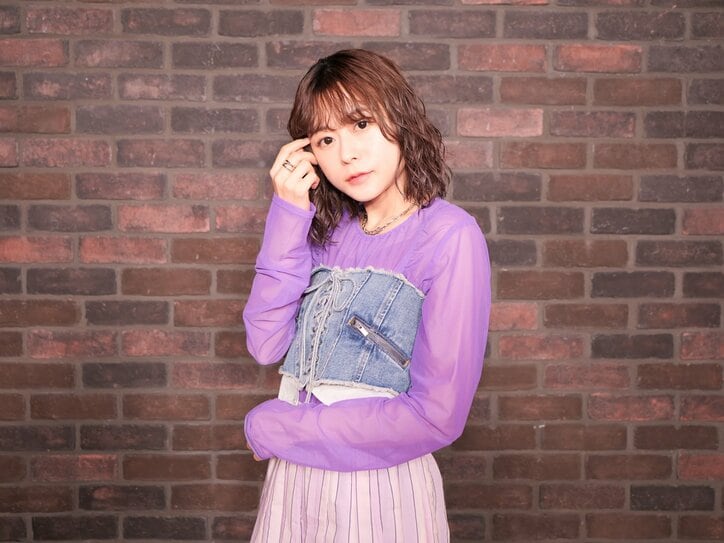
Shoko Makinohara, who was memorably portrayed in Rascal Does Not Dream of a Dreaming Girl, released in 2019, appears in this film as a high school student. Together with protagonist Sakuta Azusagawa, she works to unravel the mystery surrounding Touko Kirishima. This article presents highlights from our interview with Inori Minase, the voice of Shoko, about the story, her impressions of Sakuta, and more.
— In Rascal Does Not Dream of a Dear Friend, Shoko is a high school student again and becomes involved in the story. This is the story that brings the series to a close. What was your first impression?
Minase: This film and Rascal Does Not Dream of Santa Claus make up the college-years storyline, and I'd say the problems everyone is dealing with and the themes have matured a little.
Minase: This film focuses on each character's weaknesses and the parts of themselves they don't want others to see. On top of that, there is the difficulty of chasing something invisible (the true identity of Touko Kirishima) and an unsettling mystery element, in that not everyone shares the same understanding of it. I really felt that this was an element missing from the high school storyline in which I played Shoko.
— The characters are gradually growing up too, moving from high school to college.
Minase: Everyone decides on a path and moves on to higher education or the next school year while overcoming Adolescence Syndrome, but there are also characters whose clocks are still stopped.
Everyone grows at a different pace, and there have been as many cases of Adolescence Syndrome as Sakuta has faced and overcome one by one. I think a highlight of this film is the approach Sakuta takes in facing them.
— This is also the first time Shoko has had a major role since Rascal Does Not Dream of a Dreaming Girl, so I imagine that's a big point for fans.
Minase: I've been given the opportunity to play Shoko Makinohara, a character who is essential to Sakuta and Mai Sakurajima being able to stay happy. I was happy that Shoko came back to Fujisawa, and I recorded with joy at being able to play Shoko again on the grand stage of the series finale.
Since Shoko didn't get a chance to talk with Sakuta in Rascal Does Not Dream of Santa Claus, they talk a lot in this film. But Sakuta has also built up a resistance to Adolescence Syndrome and has become somehow reliable, and I think a part of Shoko feels a little lonely about that.
In the scenes where he shows his weakness, I felt a little relieved to see that the youth and immaturity that make a person lose sight of their surroundings still remained in Sakuta. That way of living is exactly what makes it the Rascal Does Not Dream series, I thought.
— Like in Rascal Does Not Dream of a Knapsack Kid, which closed out the high school storyline, Sakuta himself confronts Adolescence Syndrome once again in this film.
Minase: His suffering is of course painful, but I'm glad he didn't become invincible. Because I've been so encouraged by seeing him enjoy his youth to the fullest, I was also glad that some parts of him haven't changed.
Also, in an offhand conversation, I sensed kindness in his choice of words, and I was happy to learn that the wish to be a kind person, which Shoko wanted to convey, is still there inside Sakuta.
Next Page